
绝命毒师第五季
Chinese scientists develop ‘brain-reading’ AI model to help predict depression risk, may inspire future emotional-perception humanoids_我的网站

一 |
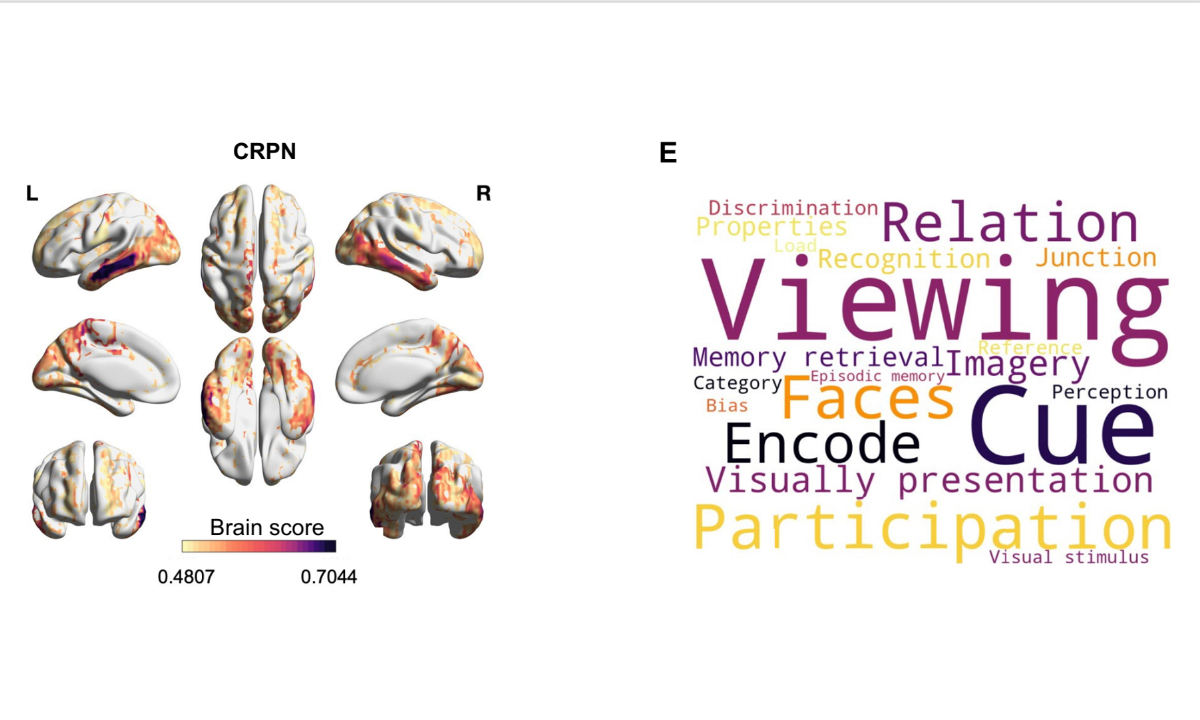
Chinese scientists have developed a “brain-reading” AI model that could help predict the risk of depression among adolescents up to four years in advance by analyzing how humans respond to facial expressions, a technology expected to inspire future development of embodied intelligent humanoids capable of perceiving human emotion and thoughts through nuanced facial cues.
WHO data show that around 332 million people worldwide have depression, about one-third of whom have treatment-resistant forms of the condition. In China, an estimated 95 million people suffer from depression, National Business Daily reported, citing statistics from the China Mental Health Survey.
Using data from a population-based longitudinal adolescent cohort recruited across several European countries, the research team led by Lu Han, assistant professor at the School of Artificial Intelligence, Shenzhen University, has built an AI model that predicted which 19-year-olds were more likely to develop depression at the age of 23. The predictions were backed up by an independent clinical cohort of individuals with depression. The team’s paper was published in the journal Science Advances this month.
According to Lu, the study used brain scans taken at age 19 to predict depression-related symptoms at age 23. The study focuses on adolescence because the transition from adolescence to early adulthood is a key developmental period when depressive symptoms can increase rapidly. The earlier risks are identified, the greater the opportunity for prevention, Lu told the Global Times on Monday, adding that the findings need to be further validated in middle-aged and older adults and across different ethnic groups in future research.
In this study, the researchers analyzed data from adolescents in the IMAGEN, a population-based longitudinal cohort recruited across several European countries. At age 19, participants underwent an fMRI emotional-face task, and their emotional symptoms were assessed using standardized questionnaires. Genetic data obtained from blood samples were also analyzed, and participants were followed up at age 23. The researchers examined whether neural representations of angry faces at age 19 were associated with emotional symptoms and could predict elevated emotional symptoms four years later.
According to Lu, people without depression can more easily distinguish emotional changes based on others’ facial expressions and respond accordingly – for example, responding with friendliness to a smiling expression. But people with depression cannot do this, and are more likely to assume people are angry with them.
A brain-aligned deep-learning model developed by Lu’s team suggested that those participants whose brains were less able to distinguish between different facial emotions and tended to perceive others as angry were more likely to develop symptoms of depression and anxiety in adulthood.
The hypothesis that adolescents at risk of depression may respond differently to other people’s facial expressions than those without such risk based on the negative information processing bias long observed in depression research: people at risk of depression are more likely to notice, interpret, or remember negative social information, Lu said.
The researchers focused on angry facial expressions because they signal social threat and rejection, which are closely linked to interpersonal difficulties and negativity bias associated with depression. They hope to further understand how this bias develops within the visual system.
Building on this, they created a deep learning model, which mimics how the brain processes visual information, to predict how the brain encodes abstract emotional concepts such as anger.
They found that 19-year-olds whose response to facial expressions was skewed in favour of negative emotions or memories were the most likely to develop some form of depression.
Based on these findings, Lu’s team then developed a marker that can identify possible warning signs.
According to Lu, the study found that the computational biomarker was linked to the depression-related variant rs11123030 and polygenic risk for depression, suggesting that genetic susceptibility may affect emotional perception. It also provided predictive information beyond family stress and socioeconomic factors, complementing rather than replacing environmental risk factors. Therefore, depression is neither purely genetic nor purely psychological, but a complex mental disorder arising from the interplay of genetic susceptibility, brain development, emotional and cognitive processes, and life experiences.
According to Lu, the study is also expected to advance AI by aligning deep neural networks with human brain activity and using parameter perturbations to probe neural mechanisms, allowing models to both predict and explain how biases may arise.
The findings suggest that future affective computing and embodied AI should go beyond simply labeling facial expressions, incorporating visual details while preventing prior assumptions from overriding real-time sensory input, Lu said, adding that the findings could provide valuable insights for developing more interpretable robotic perception systems that more closely emulate the way humans process emotions.
。

二 | 暑期过半 很多人仍会选择外出旅游 公安交管部门提醒 家长要多关心、关爱孩子 不能忽视交通安全 千万别让安全“打折” 让防护别“松懈” 同时送出 《暑期交通安全温馨提示》 请收藏、转发 交通安全隐患要警惕 步行安全篇 01 红灯停,黄灯等,绿灯行。走斑马线、看信号灯,不抢行。 02 过马路,切记走人行道,领低龄幼儿外出务必全程照看好。 03 马路行走时,要集中注意力,不玩耍、不嬉戏打闹、不随意横穿、不翻越道路护栏、不扒车、追车、抛物击车。

三 | 骑行安全篇 01 未满12周岁,严禁骑自行车上路;未满16周岁,严禁骑电动自行车上路。 02 骑车必须正确佩戴安全头盔,减速慢行,路口、人流密集处提前避让。不逆行,不双手离把、不追逐飙车,安全文明骑行。 03 驾乘电动自行车要做到“两要五不要” 乘车安全篇 01 自驾出行前提前检修车辆;严禁儿童乘坐副驾驶位,全员全程都要规范使用安全带,4周岁以下儿童须规范使用儿童安全座椅。 02 驾车在高速公路行驶时,要严格遵守通行规则,文明安全驾驶。

四 | 遇突发状况要保持冷静,牢记“车靠边、人撤离、即报警”。 03 乘坐公共交通时,要在站台有序候车,上车后坐稳扶好,不在车厢内随意走动、奔跑,不将头、手等身体部位伸出窗外;不乘坐超员及无牌无证、无运营资质的车辆。

五 | ✦ ✦ 汽车盲区事故 家长需要这么做:有意识地教授孩子相关安全知识,教孩子远离车辆,不在停车场、小区出入口、两侧停有车辆的道路玩耍。 驾驶人需要这么做:在启动车辆、倒车、转弯时,仔细察看车辆周围情况,慢起步、慢通行。

六 | 车辆有低速行驶警示音等功能的,建议打开,以提醒行人、非机动车注意。

七 | ✦ ✦ “鬼探头”事故 学生需要这么做:过马路要走人行横道或过街天桥、地下通道等行人过街设施。在没有人行横道的地方,要观察来往车辆情况,确认安全后直行通过,不得在车辆临近时突然加速横穿或中途倒退、折返。

八 | 家长需要这么做:带低龄儿童步行外出时,要牵牢孩子手腕,以免孩子突然挣脱发生意外。 ✦ ✦ “开门杀”事故 在因开车门不当引发的交通事故中,伤者有可能因为临近车道的车辆避让不及,造成二次伤害。 返回,查看更多。
Current article:http://9dx7yzy.shangfochengcongshuaizhuang.buzz/s4cdjki/d8l.html
Published on:15:05:38
我的网站相关阅读
- 这场学术交流活动 聚焦“AI+社会基层治理”
- Mailchimp替代方案怎么选?外贸企业都在用什么工具
- 「着ると着ないとでは全然違う」 ワークマンの“1900円リカバリーウェア”が追加されるたび話題に! 「ぐっすり眠れるようになった気がする」「1枚でしっかり暖かい」
- 为押注AI 软银创纪录发债!科技巨头为何集体“借钱”狂奔?
- 半导体与AI算力成焦点!上周近200股迎机构调研 3股受追捧
- 诺基亚将在加拿大投资3.4亿加元打造研发中心 聚焦5G技术
- 动力系统升级 新款一汽红旗天工06申报图曝光 电机功率340kW
- 两岸媒体人走进山西晋城体悟华夏同源
- 匈牙利樱桃、塞尔维亚蓝莓和法国猪肉都在奔向中国餐桌
我的网站最新文章
- 古城街道检查商铺筑牢安全防线
- 全市“两优一先”风采录丨张雪:发挥作用做表率 当好致富“引路人”
- 大乐透第26081期开5注一等奖
- 就職氷河期世代を直撃、7割が女性…非正規雇用の公務員「会計年度任用職員」の悲しい実態。「物品扱いで使い捨てされる」
- China-CEEC cooperation opening doors
- 中国石油工程技术研究院副总经理刘广华接受审查调查
- 安卓最强2nm芯片易主!三星Exynos 2700内部实测跑分力压高通第六代骁龙8超级至尊版
- 一名驻日美军士兵疑似手握枪支、头部流血死在车辆驾驶位,日本警方展开调查
- ふざけるな!「年金月18万円・66歳」元管理職の男性が声を荒げた……経験者大歓迎のはずが、面接後に受けた屈辱
- 岛内各界纪念日本无条件投降81周年 “历史正义不容忘却,更不容扭曲”
- 昨日估值:鸿利智汇市盈率(TTM)38.87倍,处于分位58.9%(2026年8月24日)
- 真矢さん訃報発表から一夜、メンバーが改めて悲痛コメント「本当に寂しい…」「真ちゃんのために」
- 阿隆索承认勒沃库森德甲卫冕希望渺茫,目前已落后拜仁八分
我的网站随机推荐
- 17599元起!壹号本新旗舰掌机发布:三形态自由切换
- 国产AI算力迎来“芯”质检官 百亿级芯片测试基地在富阳封顶
- South Carolina man convicted of turtle smuggling charged with turtle abuse in Georgia
- Windows10最适合下载深色墙纸:“经典XP”极乐,海滩夜跑
- 中阿启动干旱、荒漠化和土地退化防治五年行动计划
- 福建加强零工市场建设 完善求职招聘服务_就业_场所
- iPhone 14 Pro零售版到货 提前激活罚款20万/台_Max_系列
- 【透视社·履新动态】高政履新中国国家博物馆馆长,曾任莆田市副市长
- 美光科技:总裁兼CEO Mehrotra减持4万股 套现约3875.62万美元
- 乌总统办公室主任卷入巨额洗钱案,被曝受泽连斯基指示
- 2026款零跑C16预售16.98万起 增程纯电续航提升至280km 增5座版本
- 市发改委:高位推动项目建设 努力完成全年目标
- 《江西省先进制造业集群培育管理办法》 新闻发布会在南昌召开