
回家的诱惑
Chinese scientists develop ‘brain-reading’ AI model to help predict depression risk, may inspire future emotional-perception humanoids_我的网站

A |
Chinese scientists have developed a “brain-reading” AI model that could help predict the risk of depression among adolescents up to four years in advance by analyzing how humans respond to facial expressions, a technology expected to inspire future development of embodied intelligent humanoids capable of perceiving human emotion and thoughts through nuanced facial cues.
WHO data show that around 332 million people worldwide have depression, about one-third of whom have treatment-resistant forms of the condition. In China, an estimated 95 million people suffer from depression, National Business Daily reported, citing statistics from the China Mental Health Survey.
Using data from a population-based longitudinal adolescent cohort recruited across several European countries, the research team led by Lu Han, assistant professor at the School of Artificial Intelligence, Shenzhen University, has built an AI model that predicted which 19-year-olds were more likely to develop depression at the age of 23. The predictions were backed up by an independent clinical cohort of individuals with depression. The team’s paper was published in the journal Science Advances this month.
According to Lu, the study used brain scans taken at age 19 to predict depression-related symptoms at age 23. The study focuses on adolescence because the transition from adolescence to early adulthood is a key developmental period when depressive symptoms can increase rapidly. The earlier risks are identified, the greater the opportunity for prevention, Lu told the Global Times on Monday, adding that the findings need to be further validated in middle-aged and older adults and across different ethnic groups in future research.
In this study, the researchers analyzed data from adolescents in the IMAGEN, a population-based longitudinal cohort recruited across several European countries. At age 19, participants underwent an fMRI emotional-face task, and their emotional symptoms were assessed using standardized questionnaires. Genetic data obtained from blood samples were also analyzed, and participants were followed up at age 23. The researchers examined whether neural representations of angry faces at age 19 were associated with emotional symptoms and could predict elevated emotional symptoms four years later.
According to Lu, people without depression can more easily distinguish emotional changes based on others’ facial expressions and respond accordingly – for example, responding with friendliness to a smiling expression. But people with depression cannot do this, and are more likely to assume people are angry with them.
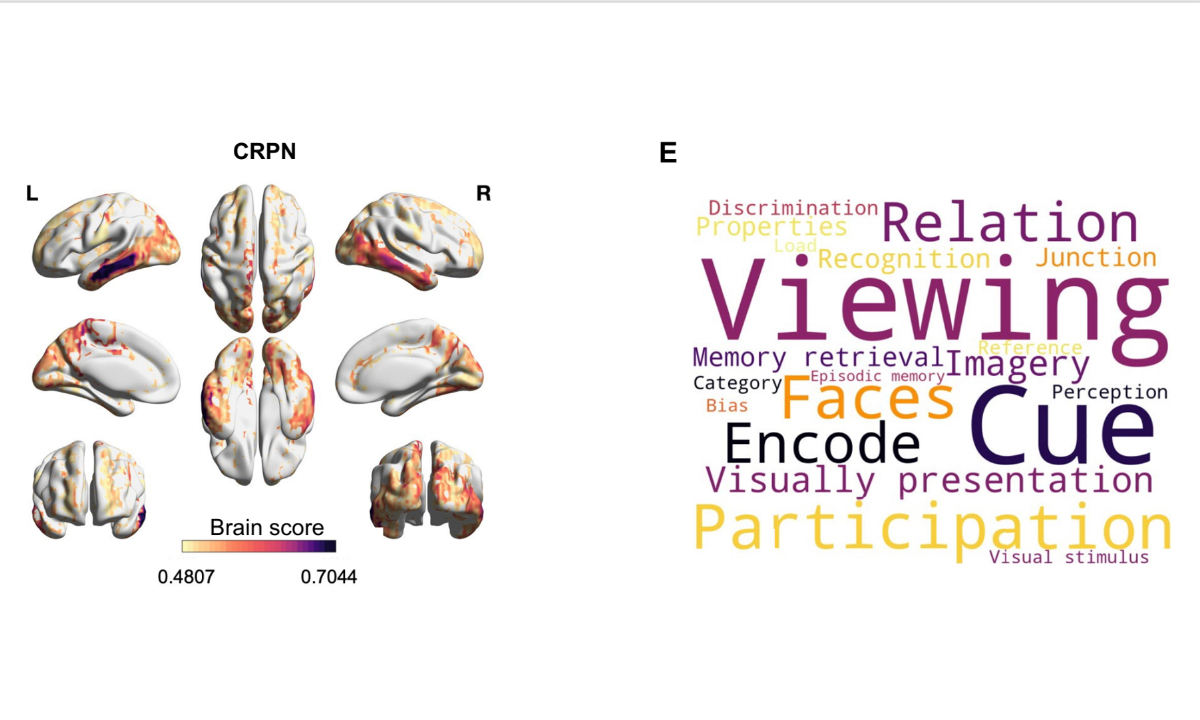
A brain-aligned deep-learning model developed by Lu’s team suggested that those participants whose brains were less able to distinguish between different facial emotions and tended to perceive others as angry were more likely to develop symptoms of depression and anxiety in adulthood.
The hypothesis that adolescents at risk of depression may respond differently to other people’s facial expressions than those without such risk based on the negative information processing bias long observed in depression research: people at risk of depression are more likely to notice, interpret, or remember negative social information, Lu said.
The researchers focused on angry facial expressions because they signal social threat and rejection, which are closely linked to interpersonal difficulties and negativity bias associated with depression. They hope to further understand how this bias develops within the visual system.
Building on this, they created a deep learning model, which mimics how the brain processes visual information, to predict how the brain encodes abstract emotional concepts such as anger.
They found that 19-year-olds whose response to facial expressions was skewed in favour of negative emotions or memories were the most likely to develop some form of depression.
Based on these findings, Lu’s team then developed a marker that can identify possible warning signs.
According to Lu, the study found that the computational biomarker was linked to the depression-related variant rs11123030 and polygenic risk for depression, suggesting that genetic susceptibility may affect emotional perception. It also provided predictive information beyond family stress and socioeconomic factors, complementing rather than replacing environmental risk factors. Therefore, depression is neither purely genetic nor purely psychological, but a complex mental disorder arising from the interplay of genetic susceptibility, brain development, emotional and cognitive processes, and life experiences.
According to Lu, the study is also expected to advance AI by aligning deep neural networks with human brain activity and using parameter perturbations to probe neural mechanisms, allowing models to both predict and explain how biases may arise.
The findings suggest that future affective computing and embodied AI should go beyond simply labeling facial expressions, incorporating visual details while preventing prior assumptions from overriding real-time sensory input, Lu said, adding that the findings could provide valuable insights for developing more interpretable robotic perception systems that more closely emulate the way humans process emotions.
。

B | 《黄昏血族》是一款由From Software制作并发行的多人动作角色扮演游戏,由宫崎英高担任总监,将于2026年内发售,登陆Switch 2平台。 今日,PC游戏媒体PC Gamer撰写了一篇专栏文章,简要探讨了《黄昏血族》目前Switch 2独占的情况,并表示在真正试玩之后,对这款游戏不上PC的焦虑就消失了,因为游戏本身并没有让人印象深刻。

C | 文章作者Tyler Colp指出,在周末进行的封闭网络测试中,他大部分时间都在一脸懵地搞不清楚到底发生了什么,即便最后终于弄明白了游戏是怎么回事,也没有觉得它有多么令人印象深刻。他表示,本次网络测试没能给玩家留下良好的第一印象,首先,测试仅提供一张地图、6名可操作角色,没有Build自定义功能,只能单人匹配,而且似乎还只开放了序章教程的一部分。

D | 在Switch 2上游玩时,无论是主机模式还是掌机模式都遇到了几乎无法正常游玩的输入延迟,花了大量时间与游戏基础操作“搏斗”。 而在试玩过后,Tyler Colp认为,《黄昏血族》最终或许会证明自己是一款制作精良、独具特色的吸血鬼多人游戏,但就目前而言,他认为《黄昏血族》更像是一堆颇具吸引力的系统杂乱地堆在一起,却没有形成一个真正值得PC玩家花大价钱购买一台主机来体验的完整游戏。游戏中有着许多经典的FromSoftware文本,晦涩得毫无必要却又极具意境,并且对于真正游玩这款游戏完全没有起到任何帮助。游戏的整体架构有点像MOBA,玩家需要刷小兵来收集“美德”点数来为每场对局最后的PvP团战做准备(如果是单人则是自由混战)。对局期间,敌方玩家会试图Gank你,你也可以去Gank别人。 并且他还表示,本作的PvP存在感实在不高,甚至可以说是无足轻重,被其他玩家击杀除了让你在刷取Virtue的进度上倒退之外,并不会带来其他影响。与其如此,还不如把它当成一款普通的魂系游戏来速通,只是在过程中偶尔有机会参与PvP。当然,游戏也有很多有趣的设计,比如可以通过喊话来招募敌人为盟友,但在实际战斗中,他们的AI有些不太适应游戏的节奏,往往不能达到你预取的战斗计划。

E | 文末,Tyler Colp总结表示,既然我们这些拥有电脑的玩家无法体验《黄昏血族》更高的帧率,也不用支付会员订阅费用,那么或许我们并没有错过太多东西。他认为,本作最出色的创意,在一款大部分时间都像是在玩一款10年前的MMO、不断刷怪完成任务的游戏里最终没能发挥出来。它没有任何东西真正吸引住我,他甚至开始觉得,《黄昏血族》最终可能会成为第一款让他选择直接跳过的FromSoftware游戏。本文由游民星空制作发布,未经允许禁止转载。更多相关资讯请关注:黄昏血族专区。
Current article:http://9dx7yzy.shangfochengcongshuaizhuang.buzz/list_lb641nx/w7rh.html
Published on:17:40:23
栏目相关
- 就職氷河期世代を直撃、7割が女性…非正規雇用の公務員「会計年度任用職員」の悲しい実態。「物品扱いで使い捨てされる」
- 5岁萌娃与民警老爸吃饭,默契配合抓网逃
- Toaster Starring Rajkummar Rao And Sanya Malhotra Set For Mid-April Release
- 26名Meta员工指控扎克伯格借助AI精准裁员8000人
- 拉科布:选怀斯曼确实判断失误 搞砸了那个榜眼签
- 江阴港区上线危化品“智慧”防控平台
- Vlad因禁赛将缺席对阵Team Liquid的无畏契约比赛
- 这场学术交流活动 聚焦“AI+社会基层治理”
- 美智子さまの手を握り、涙されたことも…「天皇陛下」66歳 「雅子さまバッシング」の苦難を乗り越え、「秋篠宮家」と評価を逆転させるまでの軌跡
- 奋进强国路 阔步新征程 | 又是一年丰收季 这里“丰”景正当时
- 凤凰女记者:伊朗战略姿态已从被动防御,逐步转向主动威慑、前置应对
- 大谷翔平は「最後は俺いきますと言うと思う」栗山英樹氏 前回WBC決勝と同じ状況になったら
热门排行
- 小米春节今天继续:小米8手机2099元,学生6免息
- 让这份文化遗产成为读懂中国式现代化的一扇窗口
- “苹果将推出租赁计划以刺激销量”
- 全区“两优一先”表彰大会召开
- 石达开亲信将领朱衣点,随石达开离京出走,后因何率部千里回朝?,泾蓝杂说,原创 石达开亲信将领朱衣点,随石达开离京出走,后因何率部千里回朝?
- 2026湘湖半马将于10月18日鸣枪起跑
- 古尔曼:苹果将在美国推出设备租赁计划以刺激销售
- 新西兰这家绿超又发现老鼠 当局称“不可避免”......
- 爱科赛博:计提减值准备减少公司合并报表利润总额872.94万元
- 华为WATCH 3 Pro new推送鸿蒙3.0.0.339更新_应用_支持
- 《昭和米国物语》女主芳容终于公布!酷似《大逃杀》《杀死比尔》女星?
- 不仅微软和谷歌,Verizon也在运行游戏流服务。